



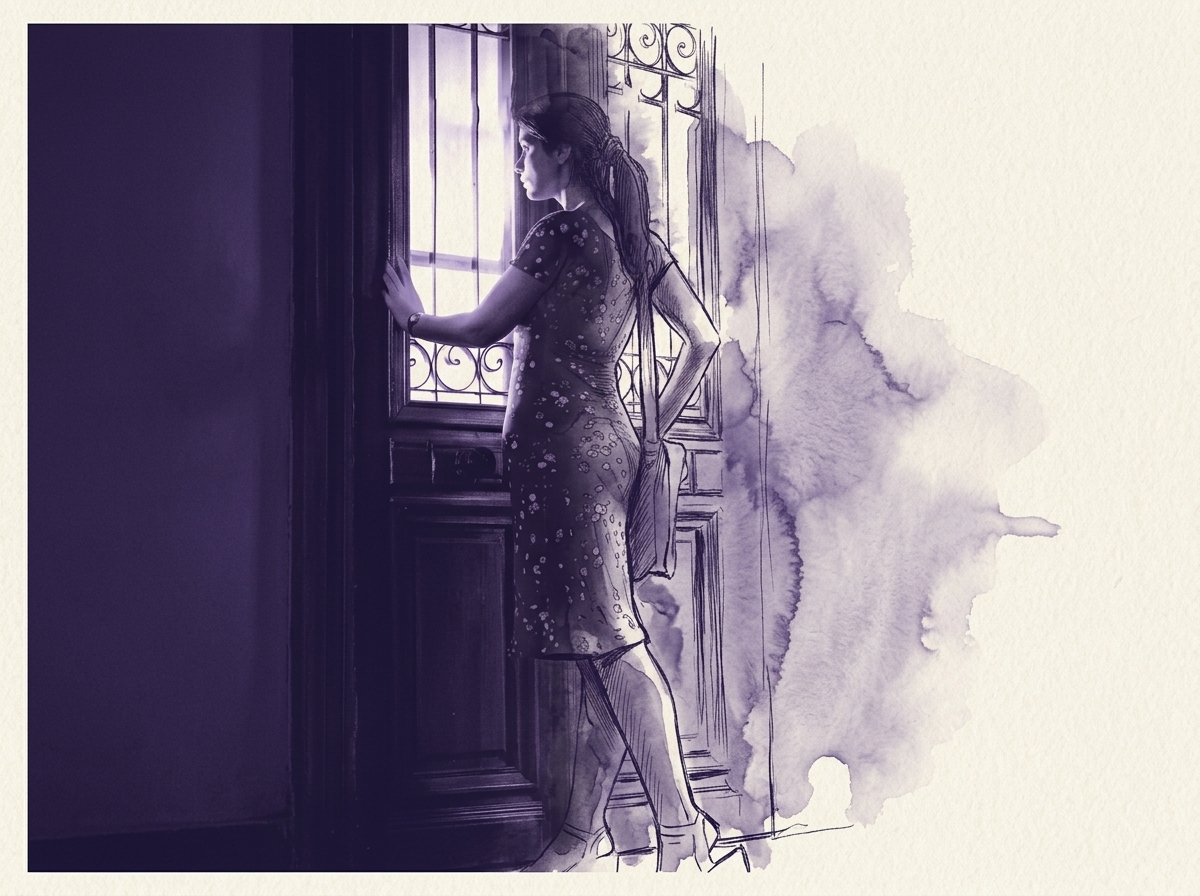

A quiet sense of certainty settles over us each time we turn our keys in the locks of our doors; we imagine we have finally returned to the space where our freedom begins and the world’s noise ends. We believe the house is the place where we stop performing roles and become “ourselves.” But cinema, when it looks closely at this place, reveals a very different face: the house is, in truth, a carefully organized structure, an invisible operating system that reshapes our awareness and our movements without our noticing. It inhabits us as much as we inhabit it, taming our desires and disciplining our spontaneity until they fall in step with the rhythm of the social order. The danger of the house lies precisely in its ability to present its own boundaries as something natural, familial, and full of love; it is a system that operates through intimacy itself, through that uncanny ability to make compulsion look like care. Cinema, when it is lucid, moves away from depicting the house as a mere decorative backdrop, showing it instead as a structure that programs our daily lives; in a static, long take, without music, the house appears as a complete system, imposing a temporal schedule on the body, shaping movements until they become a repeated performance.
Power is content to arrange space rather than raise its voice; it is enough to distribute the rooms as one distributes roles: the bedroom to regulate desire, the kitchen to order time, the living room to display the family in a coherent image that conceals its weaknesses. When we look closely at films that depict the house with this precision, we understand how the wall becomes a tool, the curtain becomes law, the corridor becomes a psychological state, and the window becomes a means of surveillance. In the cinema of routine, pressure operates as a continuous, uninterrupted act, routine being a technique for reproducing the same day until time loses its power to bring change. When the camera follows a hand peeling potatoes, wiping a table, or making a bed for the thousandth time, it is not simply recording domestic labor, but drawing invisible boundaries around the human being, confirming that the house knows how to consume a lifetime, moment by moment, until creativity becomes superfluous and imagination a deviation from the written script.
The film “Jeanne Dielman, 23 quai du Commerce, 1080 Bruxelles” (1975) by Chantal Akerman opens with a woman entering her apartment, the camera fixed in a corner, neither moving nor commenting. Jeanne performs her actions with meticulously calculated movements, in a sequence that admits no error; Akerman thus offers a record of domestic time as a frame that reproduces the conditions making life possible, but a mechanical life. The body here learns, through practice, where to sit and how to move until discipline becomes part of its very composition and silence, in a vicious circle that empties life of human meaning and reduces it to a purely administrative process. When the routine breaks over something as small as a shirt button or a light left on, the entire system collapses; and when Jeanne finally kills the man, the violence appears as evidence of the eruption of a body whose regulated rhythm has stopped. The house in this film is more an assembly line than a shelter, and the long take forces us to feel a time that accumulates and closes in on us rather than moving forward.
This sense of siege appears again in “Dogtooth” (2009) by Yorgos Lanthimos, where the idea of the house as a system reaches its most extreme form; a family lives behind a fence the children have never crossed, and the father redefines the world through language: the sea means “armchair,” the zombie means “yellow flower.” Language here becomes an instrument of confinement that makes the outside world unimaginable, depriving the victims of the very words that describe freedom, and making rebellion impossible because the children lack the tools of thought. In “Parasite” (2019) by Bong Joon-ho, the house embodies class segregation, its design distributing bodies according to their level: the servants below, the family at the center. The structure speaks the language of exclusion, and the modern house practices a form of surveillance based on elevation and smell, turning spatial arrangement into a tool for sorting people and ranking their worth. Here the system works as a force of attraction and seduction; the Kim family tries to possess the house, but the structure reproduces their place against their will, and in the end,blood runs down the stairs, confirming the class laws that make ascent impossible without collapse.
In a different register, “The Truman Show” (1998) by Peter Weir presents the house as a comprehensive illustration of surveillance for entertainment; Truman lives in a vast studio where every detail of his life is sold as a commodity. Here the system operates through allure and pleasure rather than fear, privacy being merely an illusion that guarantees the show’s continuation; the house and the town resist Truman’s liberation by endlessly reproducing a false reality, until he finally discovers that the sky is a painted ceiling, and that his shelter was never anything but a surveillance theater staged for the world. The house also disciplines us through relationships that seem natural, in which power hides behind closeness, exercising surveillance in the language of love, through notions like “reputation” and “shame.” These words create a cover for monitoring the body and one’s time, turning care into a control that strips the individual of the right to decide, until the fear of what people say becomes stronger than any law. In “Caché” (2005) by Michael Haneke, this system collapses when videotapes breach privacy, exposing old wrongs and the falseness of a domestic safety built at others’ expense.
In Arab cinema, as in “In the Heliopolis Flat” (2007) by Mohamed Khan, the apartment becomes a place for negotiating society’s gaze, where surveillance remains collective and passes straight through the walls, the house here being a moral system before it is an architectural structure. Windows and balconies act as openings that let social control in, with neighbors playing the role of watchers, so that living becomes a psychological burden requiring one to refine one’s behavior to match walls that do not hide secrets but broadcast them to the silence lying in wait outside. Despite this pressure, cinema hints at the possibility of resistance through small changes that shake the system’s stability; resistance does not always require tearing down walls, but sometimes begins by breaking the monotony of the daily schedule or rearranging objects to reclaim control within a single room. At times, writing or drawing becomes a symbolic window that turns the house from a precisely managed place into a stage reimagined through feeling, where the private room becomes a protection of the self rather than merely a place of isolation.
The features of this resistance appear clearly in “Carol” (2015) by Todd Haynes, where temporary, transient spaces, like hotel rooms owned by no one, become genuine laboratories of freedom. These rooms draw their value from lying, geographically and temporally, outside the boundaries of the familiar parental home, granting the characters a chance to build an alternative system and new rules founded on desire and equality rather than submission to orders imposed in advance.
In a similar vein, “Portrait of a Lady on Fire” (2019) by Céline Sciamma presents the space of remote, isolated summer houses as a chosen exile that frees bodies from surveillance. In this place, the house ceases to be an instrument of control and becomes a space that redefines human relationships far from the weight of social expectation, allowing the body to move from being a mere object of surveillance to an agent in possession of its own movement and stillness, in the absence of any traditional authority.
The problem lies in the system that inhabits the house and turns it into a machine resembling a factory or a prison, especially when the space is cut off from the outside and its function is reduced to control. Cinema pushes us to see the house as a political structure, a contested site, driving us, as we return home, to ask: who inhabits whom? It reveals how much we need the house as an illusion in order to be able to live in it, and how we accept its price, which lies in making our lives governed by how orderly they are, and our morality by how calm we appear to be. The house is not mere décor but a way of thinking that shapes the human being and affects our body, our time, and our language. After leaving the film, the viewer discovers that the question returns to daily life in a quiet voice: how many times have we called obedience rest, and called surveillance care? There may be no comforting answer, but it is better for the film to end in a productive unease, one that pushes us to reconsider things that seem a little too natural. The true house is the one that allows us to grow and change, and as we close our doors tonight, we might do well to contemplate these walls and ask ourselves, with fresh awareness: are we the ones who inhabit the house, or is it the house’s system that inhabits us and determines who we are?