




ONE TEAR FOR SEVERAL FUNERALS
Ah, you whore of a country!
I miss my father’s curses,
his slaps that only made me angrier.
I am ashamed of this familiarity,
of such excessive kindness
before the mouths of guns.
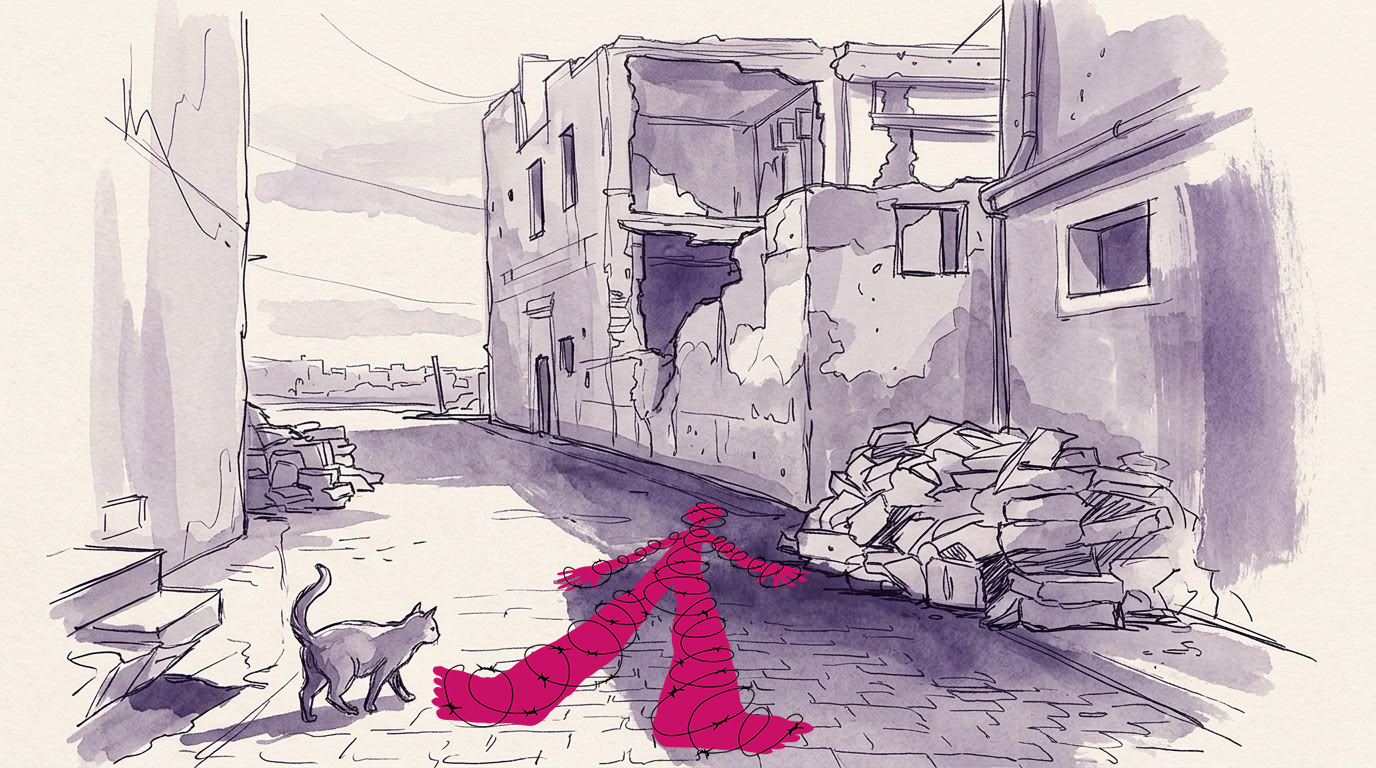
There is no unidentified corpse
without my wondering
whether it might be mine.
There is no hidden mine
without my fearing
that it will discover me.
In the forest, I call out:
The forest is fenced in
by fires and ambushes.
In the forest, I call:
The forest is the birthplace of language
and the suburb of sighing.
In the forest, I call
to every prey animal I mistake for myself:
Have you found my fang
buried in your neck?
The prey laugh.
I laugh too.
Then they fly toward the horizon,
and afterward,
I become traps made of silence and terror.
Ah, the smell of my father—
choked with smoke
and the sweat of heart attacks.
Where is my body?
Where are my dogs
that once scented my bones
from several meters beyond my grave?
Where are my feet?
How did they learn
to walk over me?
And how did I come to chase
their standing still
without ever reaching it?
You whore of a country!
You country, sacred as a whore!
I have exhausted every trick I know,
and exaggerated my forgetting of you,
until I could remember
no one but you.
I shut every window
so I could sleep,
but the laughter of carrion
had already been embalmed
inside a single tear—
a tear I kept
for several funerals.
A TORN LETTER
Those who never built themselves homes
far from their tribes and their mothers
weep like children
over candy.
Those who have never lost
their battles with life
have no beautiful scars
across their foreheads.
They draw scars instead,
to seduce teenage girls
who will quickly learn
the difference
between real scars
and those drawn with a colored pencil.
We did not learn patience by choice.
Perhaps we never learned it at all.
Even obscenities descended upon us
like revelation.
And we possess a surplus of rage
enough to turn us
into human wolves.
The boats whose sails
tore through the teeth of the storm
laugh at the boats sinking
on these peaceful days.
Never think yourself
the only fighter in the battle.
In this life, lamentation will not save you—
not even if you wail
like prostitutes
over a night
for which they were never paid.
Crown yourself with defeats,
and bless your soldiers
for their persistence
and their failures.
Close the door
or leave it open—
the storm does not need
your generosity.
And if you are not always ready
to die,
then I advise you
not to attempt living.
There is no wisdom worth mentioning
in this text.
It is only…
a eulogy
for the bodies of horses
carried away by the river.
It is a vast laughter
for my drunken friends
who count with me,
on their amputated fingers:
How many times
have we survived survival?
How many times
did the sniper’s bullet miss
and strike our skulls instead?
THE AESTHETICS OF FORGETTING
Do not forget
to say goodbye to the things you love
as you leave
the cellar of the things you love,
as you drag yourself
through fields of corn:
the cloud that loves windows,
the music of distant streets,
the vapor rising from trees
in the early morning,
your chest filled with dust,
with the footprints of horses
from your old battles,
your torn chest,
like any wall in wartime,
on the verge
of collapse.
Do not forget
to say goodbye to the things you love.
Perhaps, one day,
someone may forgive you
wholeheartedly.
One day,
you will be forgotten.
Do not forget
to say goodbye
to the things you love.
Do not explain.
Just say: goodbye,
or see you again.
And leave
like an endless procession
of rain-soaked shadows.
Sever the rope of distance
with your own hands.
Break the bridges behind you.
Erase the fingerprints of your eyes
from the place.
Burn the warehouses of winter.
At last,
smoke will rise
from the windows
of your high-rise buildings.
Break the rules of longing.
Do not pass before anyone
twice.
Just say: goodbye.
Leave
before your echo returns
carrying the corpse of your voice.
Your lungs
will not endure
the song of another bird.
Morning will not remember.
The trees will not remember.
What distance have you traveled
while carrying a nest
you do not belong to?
A SONG WITH ONE MEMORY
The same words
are spoken at every funeral,
but a single song
can sit beside you
on the shore,
sighing as you sigh.
It can take from its wallet
your old photographs—
from the days
when your mother made qatayef,
and the scent of her dress
became forests
of honey.
One song
remembers the sound
of your father’s footsteps in heaven,
his ancient brown arm,
like the street
where you ran barefoot.
A song carries you on its back
like winter fields,
crossing the wrinkles of your shadow
toward the storehouses of laughter
around your grandfather’s candle,
where you lay your head
on your grandmother’s lap,
and she strokes it
with hymns of henna
and mint.
One song—
you may forget it,
but it will always hum you
in its solitude.