



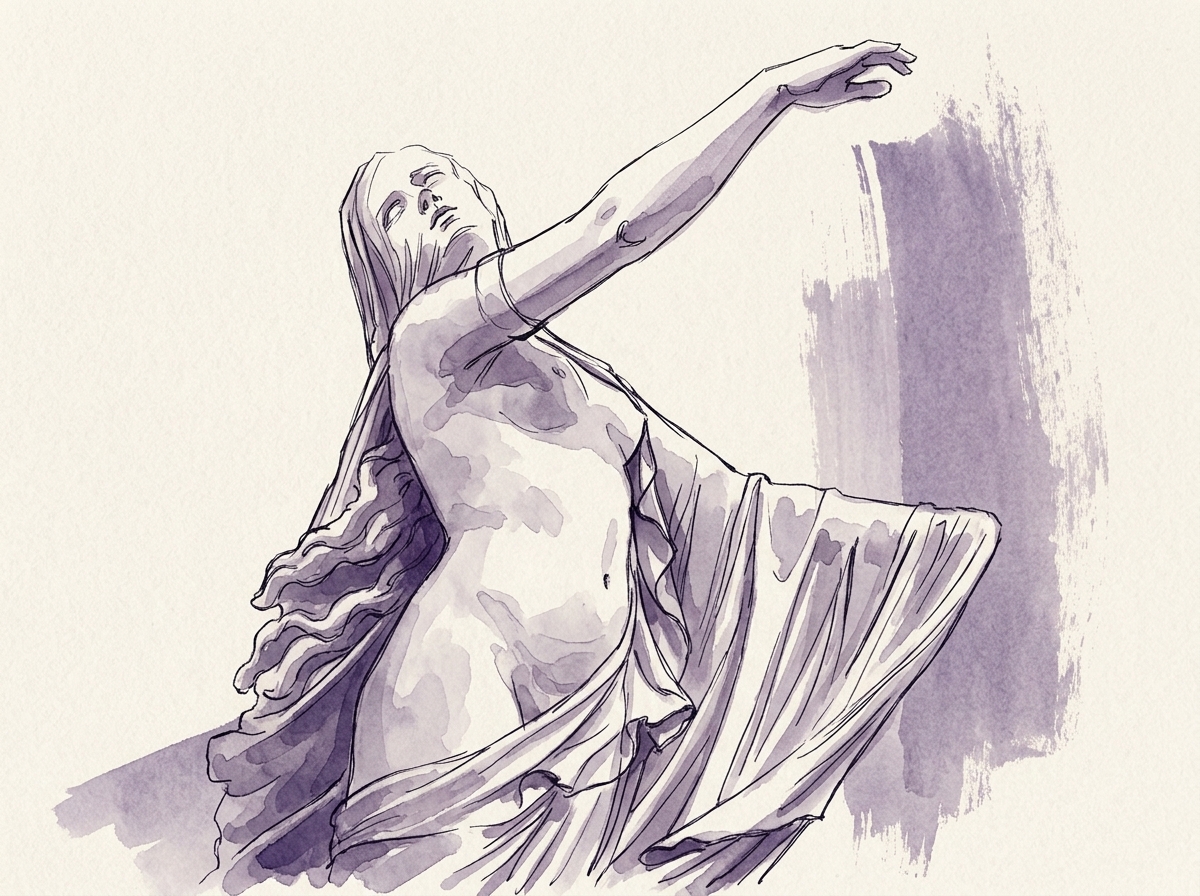



After we are born into this world, existence in its entirety contracts to fit inside a single human being. And at an early age we become aware of that face, discovering woman for the first time through our mothers, coming to understand that they are the most beautiful thing our eyes have ever fallen upon, so that life itself is sketched between their eyebrows and their chin. As time goes on, The reflections of our own feelings come to settle in their features, along with our whole manner of receiving the face of the other. I used to touch a mole hidden on my mother’s cheek, And it would quiet something of the anxiety of separation and attachment. We love our mothers so much that they become dazzlingly beautiful, Before the paths of beauty begin to entangle and our bond with the truth is severed, So that we no longer know whether we love the beautiful because it is beautiful, or whether it becomes beautiful because we love it.
Director Sam Mendes’s camera examines the life of an American family that, From a distance, looks perfect, only to reveal itself soon as a profound emptiness, the American dream in its most singular realism, An advertising image that reduced beauty to a promise that does not exist. American Beauty closes with a definition of beauty we do not expect, as the camera follows a plastic bag dancing in the wind before a wall, meant by no one and noticed by no one, and for a moment it appears the most beautiful thing one could possibly see. In the harsh grind of living, we overlook the beauty around us, until beauty itself becomes the act of staring into nothing and seeing something there; Ricky whispers, watching the tape: sometimes there is so much beauty in the world that I feel like I can’t take it, and my heart is going to cave in.
Then, as I began to experience the human condition in all its dimensions, I understood that beauty could reside in a passing kindness from a stranger, in a deep conversation with a friend, in unexpected goodness, or in a person’s insistence on being born again after being broken. Yet as its meanings widened, the question that kept returning to me remained tied to its dialectical relationship with womanhood: Why has our treatment of beauty in literature passed, specifically, through woman? Then the questions keep coming: at what moment does a child first become aware of beauty? How is that awareness translated afterward? What is the difference between the beauty of form and the beauty of substance? And which of the two does memory keep? There is a confession here that many others have written before me, but it is worth repeating: beauty is not a fixed concept that we can grasp once and for all and set at rest; it is the child of its culture and its time, and it never escapes the grip of whoever holds enough power to impose their taste on others. That is why what seems, at first glance, self evident, that we know the beautiful when we see it, is in truth one of the most complicated things there is.
I have another confession as well: my heart belongs entirely to the beauty that the first glance does not catch. Yet I came to realize that I cannot do justice to beauty if I begin from where my own inclination lies; the history of beauty, as I will trace it, is in large part the history of the power of form, how the body was presented and then subjugated, how the beautiful was separated from the good and then reconnected to it, and how, in the end, form alone was crowned. That is why I chose not to separate form from substance as a personal indulgence, but to accompany them as they part and merge across the centuries. And from here, I had to go back to the beginning.
From the very start, beauty was entangled with concepts that had not yet separated from it: the full bodied figures of the earliest statues expressed a beauty bound up with fertility and birth, and beauty also fused with goodness in its most primitive sense, at a time when goodness was not yet a moral idea, so that whatever was beautiful was necessarily good; it merged too with the sacred, since the ancients could not conceive of their gods as anything less than supremely beautiful. To them, excessive beauty was itself a sign that a divine hand had passed through. In Sumer, Inanna, later Ishtar, embodied the goddess of love and desire, and beauty was not yet a kingdom in need of a god to rule it. It was about her that Enheduanna the Akkadian, the first author known by name in human history, wrote hymns celebrating Inanna’s allure and radiance; which is to say that the first piece of literature ever signed by its author was written by a woman, about the beauty of a divine woman, evidence that we have been trying to immortalize beauty through writing for thousands of years. As for ancient beauty itself, even in the case of Aphrodite, who would later be crowned goddess of beauty, it remained more a shadow of desire than a quality standing on its own.
And as I found myself sinking, little by little, into attempts to trace the context out of which beauty had arisen, or rather why human beings first assumed that the beautiful was necessarily good, I returned to Plato and Athens, and found that the Greek language itself had fused the beautiful and the good into a single composite ideal, kalokagathia, the beautiful and the good together, the title given to the complete citizen. The separation between physical beauty and moral goodness, that is, between form and substance, was thus not something the language granted from the start. Plato’s philosophy worked within this fusion while, paradoxically, beginning to take it apart; in the Symposium, one of his most famous dialogues, he placed in the mouths of his characters the first seeds of everything humanity would later say about the body, love, and beauty.
Plato found in physical beauty the entry point and the necessary lowest rung on the way to aesthetic knowledge, what would later be called substance; for him, true beauty lies behind multiple layers that the observer must break through one after another. There is a paradox in the Symposium that stops today’s reader in her tracks: the deepest thing Plato ever said about beauty is spoken through the voice of a woman, Diotima, who may never have existed at all, a feminine mask in a dialogue written by a man about love between men, at a banquet from which women were excluded. And so the very first philosophy of beauty borrowed the voice of a woman while erasing actual women.
While Greek philosophy dwelt at length on taking beauty apart and ranked the physical at its lowest level, pre Islamic poetry, without knowing it, was doing the same thing. The pre Islamic ode does not open with war or with boasting, but with lingering at the ruins and evoking the beloved; the love prelude is the threshold of the poem just as the body was the threshold of Plato’s ladder. From there the poet sets out on his camel, across the desert and its trials, to arrive, at the poem’s end, at wisdom, the noblest of all its aims. This is how Imru’ al Qais listed his beloved’s charms, feature by feature, at the very opening of his Mu’allaqa; poetry begins with the desired body and ends at knowledge, exactly as Plato wanted the lover to ascend from the beautiful body to the Forms. Two cultures that never met, and built the same ladder.
Growing up, the notions of beauty and modesty became bound together in my mind; whoever was beautiful was necessarily tempting, and so was obliged to cover herself, or else answer to God according to religious text. Many believe that beauty and its covering were born with religion, but in truth the veiling of the body precedes the revelation of the monotheistic faiths by many centuries; in the Middle Assyrian laws, more than a thousand years before Christ, free women and the daughters of nobles were required to cover their heads, while veiling was forbidden to slave women and prostitutes under threat of punishment. The veil was the mark of a woman owned by a man of lineage. The idea of scarcity runs through beauty as well: what is scarce is desired, and what is desired is hidden; and so families set about concealing beauty in the midst of a historic shift tied to the move toward urban life and the exchange of goods and resources, since a veiled woman is a woman who has no need to work the fields, and covering thus became a mark of wealth before it ever became a mark of piety.
I cannot pass over beauty among the Arabs without giving the Quran its due. The word jamal, in its noun form, appears only once: “And in them is beauty for you when you bring them home in the evening and when you drive them out to pasture” (Surat An Nahl, 6), the beauty of a daily scene that passes unnoticed, which the text urges us to contemplate. As for human beauty, it appears in the story of Joseph as a bodily shock we experience at the sight of the beautiful: women cut their hands, stunned, saying, “this is no mortal.” What stuns me in Joseph’s story is that his beauty is itself his curse; the first case of excessive beauty in the sacred text is a man who paid the price of his own beauty and rose above it, and it is this very transcendence that later opens the door for the mystics, who turned Joseph’s beauty into a testimony to divine beauty. Between the two, Ibn Hazm wrote, in The Ring of the Dove, about the first glance and the authority of the eye: how love enters through sight before the soul even knows what has struck it.
If love enters through the eye before the soul knows what has struck it, then what authority is left for morality over what the eye chooses? The question is older than I thought, it had already been posed in Athens, and it was Plato’s own student who answered it. In the Poetics, Aristotle separates aesthetic judgment from moral judgment, the first such separation in the history of thought: for him, tragedy can portray evil and still be beautiful, because its beauty lies in its construction, not in the virtue of its subject. With that, the kalokagathia that the Greek language had once fused together cracked apart; it became possible, for the first time, for a person to be simply beautiful. But is beauty enough on its own?
In the film Wolf, Jack Nicholson says to Michelle Pfeiffer something that still speaks to one of beauty’s dilemmas today: you are beautiful enough that men turn to look, but you want them to turn for you, for what lies behind the face and its layers; and the tragedy is that what lies within may not be worth the journey, and that the one thing that ever makes anyone undertake it in the first place is that very face. In one short scene we are told that beauty is what drives us toward discovery and toward bearing the hardships of knowledge; it grants the beautiful the chance to be discovered, while at the same time denying it the certainty of ever being discovered for itself.
Yet this very dilemma, The beautiful becoming aware of what its own beauty means, had not yet been born, because the beautiful had not yet separated from the sacred. Thus the boundaries of the aesthetic gaze were drawn through the Middle Ages, until the Renaissance brought the divine down from its heaven into the human body, through the harmony described by the Roman architect Vitruvius, who saw the human body as something that could be inscribed within both a circle and a square, a symbol of the divine harmony that made man a bridge between the divine and the material. This was one of the cornerstones of Renaissance humanism, which raised the human body to the status of a miniature world of creation, yet the body enclosed within the circle and the square was a man’s body. Woman, meanwhile, remained, even when painted, as in Botticelli’s Venus, either a goddess or covered by her own hair. Male perfection is put on display, female perfection is either deified or concealed. And yet no one in that century was asking who was doing the looking; beauty was still a quality residing in the body, not a judgment residing in the eye of the beholder. That question would have to wait several more centuries.
And through all of this, beauty had still not become independent of the other great concepts, the religious, the moral, and the mathematical. In 1750 the German Alexander Baumgarten published a book titled Aesthetica, coining the term aesthetics from the Greek word aisthesis, meaning sensory perception; through it beauty finally gained a science of its own, after remaining for centuries subordinate to other fields, only to become independent of things themselves and shift instead into the eyes of those who behold them. Hume, in effect, transferred the authority of aesthetic judgment from the beautiful object to the one contemplating it; for him, beauty does not reside in things themselves but in the mind that contemplates them. He then redistributed that authority to particular critics, meaning that beauty ceased to be a quality possessed by its owner and became instead a judgment rendered by someone else, with some deemed more qualified than others to render it, laying the groundwork for stripping the ownership of beauty from the one who carried it. Then came Burke, who distinguished between the beautiful and the sublime: one expressing delicacy, weakness, and the need for protection, the other the vast, the terrifying, the powerful, and he tied the first to femininity and the second to masculinity. With that, philosophy gave beauty, for the first time, an explicit gendered dimension in a written philosophical text.
Perhaps the most notable figure to take up beauty in that century and separate it from desire and utility was Kant: in the Critique of the Power of Judgment, he offered the most famous definition of aesthetic judgment in the history of philosophy, disinterested satisfaction, liking something without wanting anything from it, so that a rose is beautiful precisely when you have no wish to pick it. Among the most important things in his work is his distinction between free beauty, which is not bound to any prior concept, and dependent beauty, which we judge by comparing it to an idea of what it ought to be. Kant placed human beauty in this second category: the beauty of human beings can never be pure form, because we never look at a face without bringing to it some ideal of what a human being ought to be. And so the eighteenth century closed, driving substance out of the kingdom of beauty and crowning form alone, in the hands of the beholder rather than in the hands of its possessor.
In truth, this essay has no room to trace where beauty went, philosophically and epistemologically, in modernity and beyond, but I can say that one of the clearest manifestations of beauty in the twentieth century came from cinema and art, which drew closer to the contemporary human being than any century before. The aesthetic emerged in music and in popular culture too, stepping outside the bounds of traditional academic knowledge; it became available to anyone sitting in a dark theater or listening to a song. Beauty broke its molds, and for one brief moment it seemed to have been reclaimed from those who held authority over it. Then came the twenty first century, which chained it to industry and subjected it to the standards of the market and of trend.
And the question the eighteenth century opened, and that no one has closed since, remained: who is the one looking? Hume moved beauty into the eye of the beholder, never imagining that this eye would become, two and a half centuries later, an algorithm shaping the face of the world and rearranging everything within it, to the point of affecting our very senses and our attention to the beauty around us. Artificial intelligence has inherited the gaze without inheriting the experience that shaped it; how, then, does our taste take form when a viewer with no eyes, without even a human being behind it, already sees before we do? Are we entering, today, as the machine comes to dominate, a new aesthetic age? There is a child within me who once witnessed an unforgettable sunrise, and who reminds me that beauty is felt before it is judged, and that it refuses to be locked into molds carefully measured at every angle and limited in every dimension. That is why I will keep searching for it where the algorithm cannot reach, in the unfamiliar and the forgotten, where memory, nature, and fragility meet.