



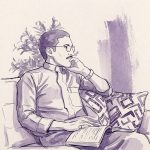

He pressed his ear to the door of their house, hoping to hear his mother’s voice calling for him. It was not yet time for her to sit beneath the old tree that divided its shade between the house and the street. He stood beneath the tree waiting, watching the passersby. A girl came out of the house facing the mosque’s mihrab and walked a few steps to get into her brother’s car. He followed her with his eyes until the car vanished, Then murmured:
“If the clouds drift away, then let them perish!”
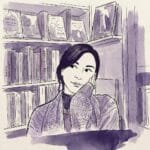
“Mizna” was their neighbors’ daughter and his younger sister’s companion. Before she took the veil in middle school, he used to pass by her house to walk his sister to school and back. Her laughter, her playful shyness, and the fine eyebrow that rose whenever she smiled were an inexhaustible source of joy for him. Then she vanished from his sight after she veiled, and the memory of those walks remained a hidden spring he visited whenever sorrow overtook him.
Years later, he noticed that some of the books piled beneath his bed had disappeared, and it troubled him. There was no reader in the house to suspect, nor any connoisseur to question should denial follow. The books in his room belonged to two categories: those he had read, which he kept beneath the bed, and the new ones, stacked on top. No one knew this system except his sister, who claimed to despise reading. Despair nearly overcame him, but he resolved to watch her before confronting her.
One morning she left before him in a hurry, wanting to catch the university bus, and stumbled in their courtyard, scattering the contents of her bag. He rushed to her, steadied her reassuringly, then went out and asked the driver to wait. He came back to gather her things, and his eyes fell on his own book, “The Ring of the Dove.” He pretended not to notice, and she did not realize he had seen it, then he held her hand until she boarded the bus.
He went to the university, his mind entirely possessed by a single idea, one he refused to believe otherwise:
“The books are for Mizna! I swear, I will not ask my sister, and I will not search for my books.”
He drowned in his dreams and was overtaken by his illusions, his body alone remaining to drift through his day. He busied himself counting his missing books, remembering some and forgetting others. Then he imagined her slender fingers turning the pages, her wide eyes passing beneath her delicate eyebrows, and he found himself envying his own books. He spent his whole morning smiling, as though good news kept arriving, each surpassing the last.
He returned home in the afternoon full of hope, ready to carry out what needed to be done. He began by taking stock of his books and confirming their number, and found that three were missing. He put everything back as it had been to avoid arousing his sister’s suspicion, and forced himself to wait.
That night, he searched through his books and found the novel Magdolin returned to its place. He flipped through its pages quickly, like a destitute man digging through the earth in search of buried treasure. He found nothing, blamed himself, then went through it again, more carefully.
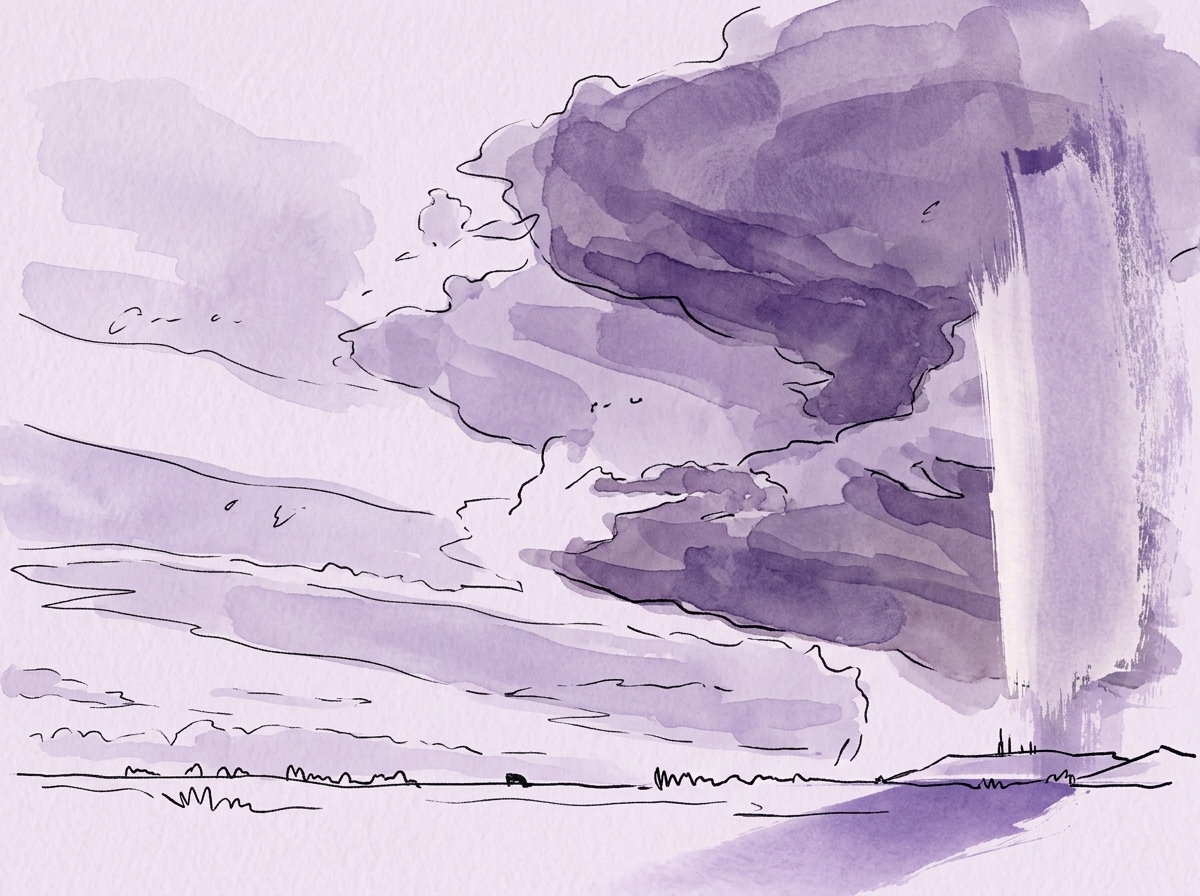
One of his secret habits was to alter the name “Mizna” into “Mouzna” and write this altered name above the name of every beloved who caught his fancy. Once, while reading books on the Arabic language, he came across the names of clouds, and the meaning of al-muzn, whose singular is muzna, delighted him. From then on, he adopted it. He loved the name and believed in its meaning; to him, she was the white cloud that cast its shade over the barrenness of his neighborhood.
In his second, more careful reading of “Magdolin,” his heart, before his eyes, fell upon a mark. He had once written, following his secret habit, “Mouzna” above the name “Magdolin.” The mark took the shape of two lines curved upward, above the name “Mouzna,” and it looked like a smile that made his heart laugh. He cried out:
“O joy of my heart, Mouzna!”
For three years his books traveled back and forth, and the messenger was the name “Mouzna,” carried on a line and returning crowned with a smile. Both were content with the messenger and the message, and disliked adding anything more.
And today, he sees Mizna leaving with her brother in front of him, and he wishes he knew the hour of her return. The sparrows suddenly flew up from the great tree, and he knew his mother was coming. She used to sit, just before every sunset, beneath its branches in the courtyard, and before doing so she would strike the trunk with her cane to drive the birds away from her coffee and dates. He called out:
“Mother, open the door.”
He leaned his back against the door, his eyes fixed on Mizna’s house, and hummed:
They blame me for “love,” and “love” is a cloud
That, when it rains upon a place, makes the flower grow
He handed the coffee cup to his mother, who took it while talking without pause about her sisters and their children. Then she told him, proudly, what she had said to her sister about his approaching graduation. She looked at him with eyes swaying between pride and love, and said:
“If you get a job, I’ll ask for your hand in marriage right away, God willing.”
He smiled and said:
“Ask for Mouzna’s hand for me.”
His mother laughed so hard that the gap where her right tooth was missing showed, and said:
“You love to joke! What does one thing have to do with the other? We are 320, and they are 420.”
He said, the smile gone from his face:
“I am not joking. And I did not understand what you said.”
She said:
“You don’t know that we are 320 and they are 420? You’re about to graduate and you don’t know your own origin?”
He sat stunned and bewildered, then stood, returned, and sat down again. “What do you mean, 320 and 420? What are these numbers?” he muttered. He rose once more and stepped into the street, wandering in confusion. He walked aimlessly until he caught sight of the mosque’s imam, Mizna’s uncle, entering the mosque.
Her uncle was a righteous young man, just past thirty. They had often sat together at the mosque, and in his company he had found warmth, sound judgment, and conversations about books and writers that lingered in the heart. He hurried after him, determined to confide in him about what had happened.
He waited until the imam finished the greeting prayer of the mosque, then approached him. The imam welcomed him and noticed the change in his state, so he sat him down gently. He launched into his story about his mother, then laughed a strange laugh, astonished at his own words, waiting for the imam to deny what she had said.
The imam shifted his seat, moved back a little, then said:
Your mother’s words are correct. But what is more astonishing is how a young man of twenty two does not know this!
Know what? That we are 320? Or 420? Is this a religious matter, a political one, a social one, or what? I am lost and ignorant. I thought racism had ended! I am a Saudi citizen, I hold an ID card just like you, and a Muslim besides, sheikh! Who does this kind of classification please?
God, glory be to Him, made us peoples and tribes, and favored some of us over others, and…
For God’s sake, leave God out of it! Peoples and tribes exist so that we may know one another, and favor lies only in matters of provision. If you believe we were all created from Adam and Eve, then that means we are equal!”
“Speak of God—glory be to Him—with respect. You are in His house!”
“I have not disbelieved! Say what you will, but beware of legislating as though your words were revealed Qur’an!”
The imam rose, contempt written across his face, and turned toward the mihrab. Then, in a voice he believed to be quiet, he said:
“Even the 320 has forgotten herself! She wants to be like us!”
But his voice carried. The young man lunged at him at once, shoved him to the ground, then knelt over him, striking him and hurling curses. The people in the mosque rushed forward, some to pull them apart, others to call the police. Soon afterward, he was led away in handcuffs to the police car.
The last thing he heard before leaving the mosque was the clamor of voices around the imam, and someone saying:
“The 320, they’re trouble makers!”
He raised his head as he sat in the police car, looking at Mizna’s house. He realized that Mouzna had departed from his sky after Mizna had returned.
The last missing book was the novel “The Pigeon Does Not Fly in Buraidah.” He had already read it, and had found no woman in the novel equal to Mouzna, so he had left it empty, without a messenger. He assumed she was reading it, searching for her name among the novel’s heroines, and would be upset to find it absent.
Her imagined sorrow moved him deeply. He lowered his head, his tears falling onto his torn robe, then wept, whispering:
“Nothing flies in our neighborhood!”