



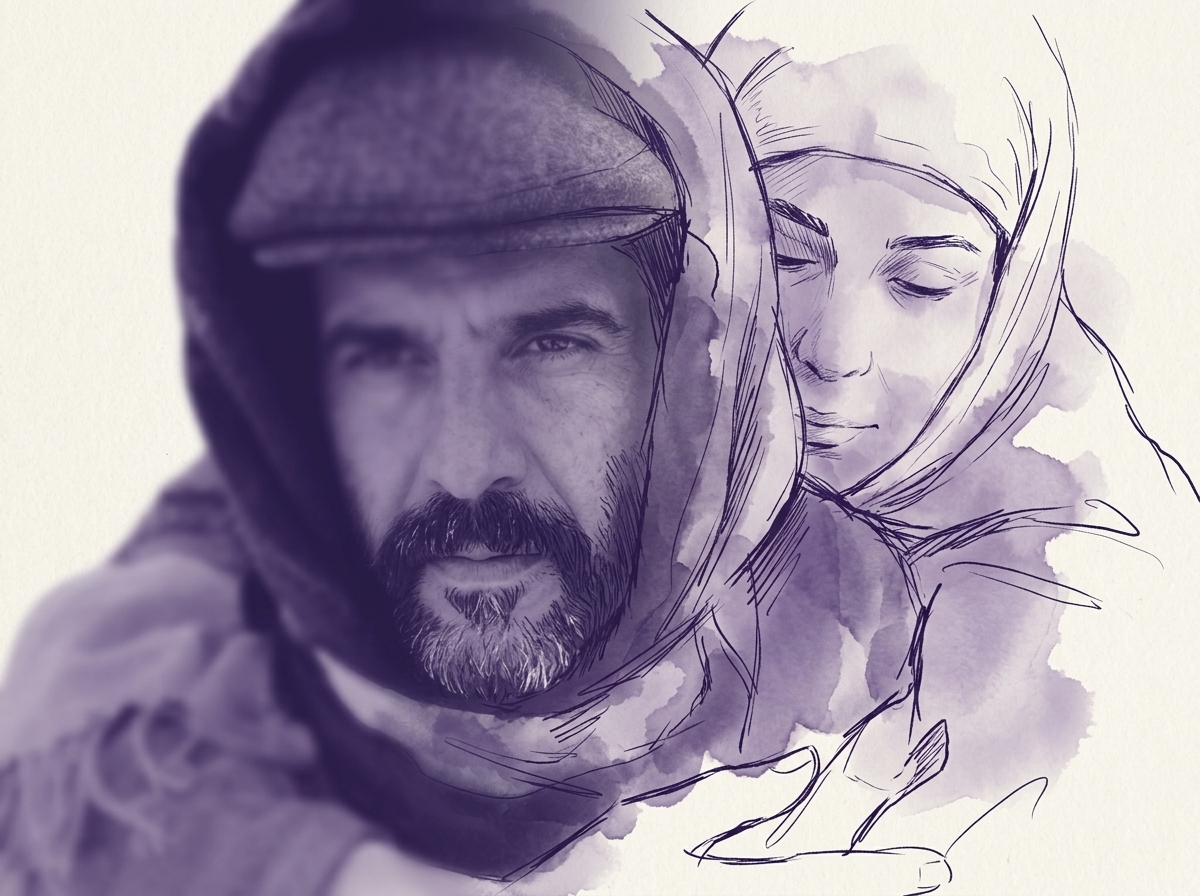



Third Cinema is among the most politically and socially engaged cinematic movements, one that does not merely depict reality but actively seeks to critique it and contribute to its transformation. It emerged during the 1960s and 1970s, before attracting growing academic attention in the 1980s, particularly following the publication of Teshome Gabriel’s Third Cinema in the Third World. The movement is defined by its critical and emancipatory stance toward systems of domination and power. Third Cinema aspires to transcend the function of entertainment, calling for a fundamental rethinking of the methods of film production and the representation of reality. It therefore draws, in many instances, on collective production and employs narrative forms that diverge from dominant commercial cinema. It is also distinguished by a realist tendency informed by Italian Neorealism, and deploys both documentary and fiction film to give expression to the concerns of marginalized communities.
The manifesto “Towards a Third Cinema” by Fernando Solanas and Octavio Getino helped clarify the foundations of this current, alongside Glauber Rocha’s reflections on “the aesthetics of hunger” and Julio García Espinosa’s concept of “imperfect cinema.” These frameworks hold that cinema ought to serve as an instrument of social awareness and critique, making the viewer a partner in thought and change rather than a passive recipient. Despite its limited reach compared to commercial and auteur cinema, Third Cinema distinguishes itself through its political boldness and critical depth, seeking to expose social contradictions and propose alternative visions of a more just society.
Within this context, Kurdish director Yilmaz Güney emerges as one of the most significant cinematic voices to have forged a link between art and social reality. His cinematic project was entirely devoted to capturing the transformations experienced by the peoples of Turkey, with particular attention to the lives of the working classes and the hardships they face poverty, marginalization, and social conflict. Through his films, he sought to offer a critical representation of reality, far removed from conventional heroic models, drawing instead on ordinary characters who reflect the political and social tensions lived by Turkey during the second half of the twentieth century.
The contours of this project are clearly visible in his celebrated trilogy ” The Herd” The Wall, and The Road ,which constitutes successive and complementary stages of his artistic and intellectual vision. The Road is the most accomplished of these works in its capacity to unite the human and the political, making it an exemplary model for the embodiment of the principles of Third Cinema.
“The Road” as a Model of Third Cinema: A Reading of Freedom, Captivity and Structural Repression in Turkey
The Road offers a comprehensive portrait of the peoples of Turkey in the aftermath of the military coup of 12 September 1980, following a group of prisoners granted temporary leave from the semi-open prison of Imrali. Yet this leave does not represent a genuine passage into freedom; rather, it transforms into a journey that lays bare the social and political constraints governing the lives of individuals outside prison walls. Through the movements of the characters between villages and cities, the film draws a vast panorama in which political power intermingles with social customs, family relations, and economic structures.
The film opens on an image of birds soaring through the sky before cutting directly to the prison space and its rigid instructions, establishing from the outset the central paradox on which the work rests: a man may leave prison, yet he remains captive to other forms of domination. From this premise, the narrative branches into a series of trajectories that reveal the limits of freedom within Turkish society at the beginning of the 1980s. The characters collide with deeply entrenched social and cultural structures, forged over long decades of poverty, marginalization, patriarchal authority, and political conflict. Seyit Ali finds himself captive to a traditional honor system that grants the community the power to determine the individual’s fate: he is pushed to confront his wife, accused of infidelity, despite his inner hesitation and his inability to fully conform to what custom demands. The tragedy of the character arises not from an individual decision but from a social pressure that renders any departure from prevailing norms almost impossible.
Mevlut, for his part, embodies in his story the persistent hold of the family over the private sphere: engagement and marriage become a collective affair subjected to constant surveillance and interference. His experience reveals the limits of individual freedom within a society that continues to regard personal relations as part of the family honor system, preventing the construction of an autonomous life founded on personal choice.
By contrast, the character of Yusuf offers another image of human fragility in the face of bureaucracy and power. The mere loss of his leave permit dissolves any possibility of contact with the outside world, and his fate becomes hostage to rigid administrative procedures indifferent to his circumstances or his suffering. His story acquires an even more tragic dimension when he returns to prison before having been able to learn of his wife’s death pointing to the capacity of punitive institutions to sever fundamental human bonds and reduce personal life to a succession of silent losses.
Omar, meanwhile, occupies a central position in the film’s dramatic construction, for his experience extends beyond the boundaries of individual tragedy to touch on the reality of Kurdish border regions during that period. His return to his village reveals a space governed by the militarization of daily life, where checkpoints and military patrols proliferate and the population lives under permanent surveillance. At the same time, he finds himself subject to tribal customs that compel him to marry the wife of his killed brother who had been engaged in smuggling along the Syrian-Turkish border and to abandon the young woman he loves, giving the conflict between individual will and collective obligations its most vivid expression. Through this character, the film reveals how state power intertwines with the authority of tradition to produce overlapping forms of domination, such that escaping one means falling into the grip of the other.
These tragedies reach their apex in the story of Mehmet Salih and his family, one of the most tragic trajectories in the film. Mehmet Salih lives under the weight of accusations leveled by his wife’s family, who hold him responsible for the death of her brother, making him a permanent target of the prevailing logic of vengeance. Amid this conflict, his wife finds herself torn between belonging to her own family and holding on to her married life and her children, living in a state of perpetual anxiety and waiting. Despite the social and familial pressures surrounding her, she ultimately chooses to stand by her husband and leave with their children, in an attempt to turn the page on the past and reclaim some measure of stability. Yet this moment, which appears to herald a reconciliation and a liberation from the cycle of enmity, swiftly turns into tragedy. During their train journey, the family is overtaken by the very logic of vengeance from which they had tried to flee, and the story concludes with the murder of Mehmet Salih and his wife before the eyes of their children, at the hands of the wife’s younger brother. Through these characters, the film reveals that repression can be reproduced within the social fabric itself, not only through formal institutions. Family, custom, and the concepts of honor and shame become mechanisms that determine the fates of individuals and impose upon them particular patterns of behavior. Captivity thus becomes a social and psychological condition that exceeds the boundaries of the physical prison.
The film’s most significant dramatic trajectories unfold within Turkish Kurdistan, where the stories of Omar, Mehmet Salih, and Seyit Ali take place in an environment that illuminates a crucial dimension of Kurdish reality during that historical period. Place emerges as an active element in the shaping of characters’ fates and the course of events. The isolated border villages, the heavy military presence, the proliferation of checkpoints, and the atmosphere saturated with fear and apprehension all reflect a reality lived by Kurdish regions in the aftermath of the 1980 coup.
Through these characters, the film offers a representation of Kurdistan as a space in which multiple forms of marginalization and violence converge. Beyond poverty and geographic isolation, the characters confront the effects of political exclusion and permanent security surveillance, while traditional customs continue to impose their authority on daily life. The tragedy of Omar, Mehmet Salih, or Seyit Ali is therefore inseparable from the Kurdish context that contains them, for their experiences are formed at the intersection of political repression, social traditions, and harsh economic conditions. The Road may be regarded as one of the most important cinematic works to have introduced the Kurdish question into the arena of world cinema. The film offered an image of the regions of Turkish Kurdistan — their marginalization, violence, and military surveillance — during a period of acute political sensitivity. The film’s wide international distribution, and especially its receipt of the Palme d’Or, helped carry this image to a global audience, conferring on Güney’s work a political dimension that extended beyond the boundaries of cinema, given his tense relationship with the Turkish authorities.
Representations of Women under Patriarchal Authority and Social Custom
This vision gains further depth through the presence of women in the film, which occupies a foundational place in the work’s dramatic construction. The female characters reveal an essential aspect of the social relations prevailing in the society the film depicts. Women’s lives are bound up in a system of customs and traditions that defines their roles and the scope of their freedom of movement, granting the family and the community broad authority over their personal decisions. Through this feminine presence, the film throws into sharp relief the glaring disparity in the distribution of power within society, and the burdens borne by women as a result of this social structure.
Zine, Seyit Ali’s wife, emerges as one of the film’s most tragic figures: her life becomes suspended from social judgments linked to the concept of honor. The significance of this character lies in the fact that she reflects a wider reality lived by many women within a society that places paramount importance on family reputation and situates woman at the center of this system. Mevlut’s fiancée, by contrast, appears in an ostensibly different position, yet the circumstances surrounding her reveal that she is subject to the very same constraints. Her relationship with her fiancé is under constant family surveillance, and her capacity to make decisions concerning her own life appears extremely limited. Seen in this light, both characters seem to belong to the same social trajectory; the difference between them pertains more to the stage each is passing through than to the nature of the constraints imposed upon them.
The story of Omar’s sister-in-law reveals yet another dimension of women’s condition within rural Kurdish society: compelled to accept marriage to her husband’s brother after her husband is killed by border guards, familial and tribal considerations come to encroach upon the personal lives of individuals. Events show how women can be made the pivot of negotiations over inherited social obligations, in the absence of any genuine space to express their own desires or determine their future independently.
If the wife of Seyit Ali and the fiancée of Mevlut lay bare the forms of domination imposed on women in daily life, the story of Mehmet Salih’s wife represents the most tragic face of this control, to the point where her suffering extends to a threat against her very existence and life, under the force of the logic of vengeance and familial violence. Mehmet Salih’s wife finds herself caught between two contradictory allegiances: her own family, which holds her husband responsible for the death of her brother, and her husband, alongside whom she attempts to preserve her family despite the climate of vengeance and hostility surrounding them. This character lives in a state of psychological and social rupture, becoming the victim of a conflict over which she exercises no real authority neither to guide it nor to bring it to an end. When she finally resolves to leave the past behind and accompany her husband with their children to Istanbul, her decision appears to herald a moment of reconciliation and a triumph of the will to live over the logic of revenge. But the film wastes no time in undermining this hope, as the journey ends with the murder of the family inside the train, carried out by her younger brother bent on exacting vengeance. This ending acquires a deep symbolic resonance, revealing the impossibility of escaping the circle of violence when the values of vengeance and honor have become a power that exceeds the will and desires of individuals.
This feminine presence confers an important social dimension on the film, making the condition of women an index by which to measure the nature of relations prevailing within society as a whole. The issue is not one of isolated characters or exceptional incidents, but of a social structure whose effects reverberate through the details of everyday life and through the trajectories of the various characters. Alongside the construction of characters and the treatment of social questions, the aesthetic and visual choices play a central role in the construction of meaning within the film.
Aesthetic Structure and the Representation of Space in The Road
The aesthetic structure of The Road is grounded in a realist approach consonant with the intellectual and artistic references of Third Cinema, where the cinematic image is employed as an instrument for analyzing social and political reality and exposing its contradictions. This is evident in the reliance on location shooting, and in the adoption of a performance style marked by expressive economy and freedom from dramatic excess, which reinforces the sense of the authenticity of events and lends the work an air closely akin to social testimony. Space plays a pivotal role in the production of meaning within the film, presented as a structural element that participates in the formation of sense. The roads stretching into the distance, the border villages, the stations, the trains, and the snow-capped mountains together constitute a visual system that reflects the situations of the characters and defines the nature of their relationship to their social and political surroundings. Within this framework, the road acquires a symbolic significance that transcends its immediate spatial function, becoming an expression of the state of perpetual transition inhabited by the characters between hope and disillusionment, between the desire for liberation and a reality that imposes its various constraints. The borders and military checkpoints also occupy an important semantic position within the film’s visual construction, embodying the presence of power in everyday space and transforming movement and displacement into an experience conditioned by surveillance and control.
The austere natural landscapes, and above all the snow-covered scenes and vast mountain expanses, contribute to building a permanent sense of isolation and fragility. Nature is transformed into a visual intermediary that reflects the existential and social conditions of the characters. Through this deployment of space, the film succeeds in establishing a deep connection between place and human experience, such that the visual landscape becomes a carrier of social and psychological meanings that exceed the boundaries of direct narrative, and endows the work with a semantic density in keeping with its overarching critical project.
Conclusion
The Road transcends the status of a film about a group of prisoners who have obtained temporary leave, offering instead a critical reading of the social and political structures that determine the fates of individuals. By tracing the experiences of its diverse characters, the film reveals that freedom is not reducible to the mere act of leaving prison, but is shaped by a complex network of constraints bound up with power, custom, poverty, and social relations. It thus succeeds in converting scattered individual stories into a comprehensive portrait of societies living under the weight of multiple forms of repression and marginalization.
The film’s importance is equally apparent in its capacity to unite the human and the political within a realist cinematic language in keeping with the principles of Third Cinema, where characters, spaces, and events become instruments for exposing social contradictions and raising questions about freedom, justice, and human dignity. Its receipt of the Palme d’Or at the Cannes Film Festival in 1982 contributed to cementing its standing as one of the most significant cinematic works to have carried the image of Turkish and Kurdish society to a global audience.
It is worth noting that the screenplay written by Yilmaz Güney was more expansive than the version that reached the screen, including additional characters, trajectories, and events that were not realized due to the constraints of production and filming. This reveals the scope of the intellectual project that underpinned the film, and confirms that the completed work represents a concentrated cinematic formulation of a broad social and political vision one that made The Road one of the most important models of Third Cinema in the history of world cinema.