



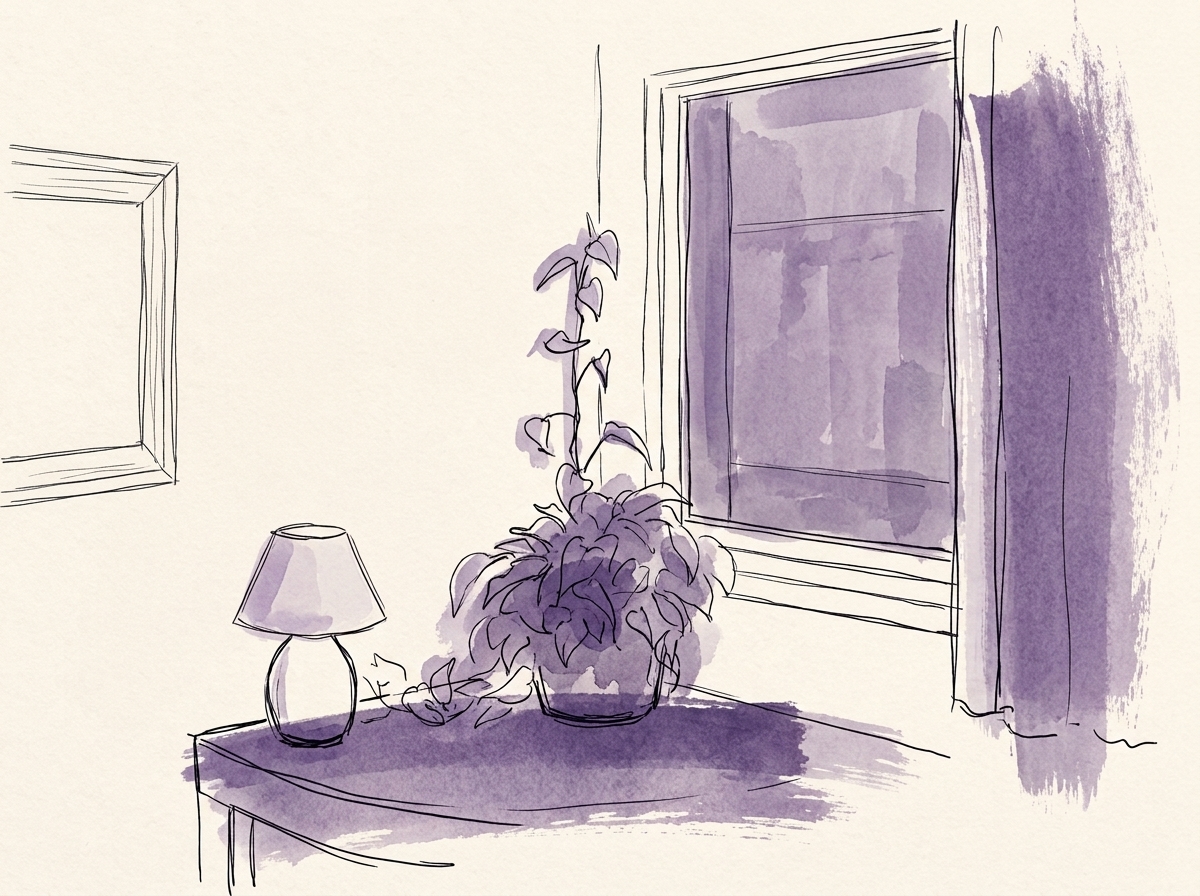



When we think of intimacy, we tend to associate it with the body, and it can indeed be so, yet it is also deeply personal and spiritual. It is a profound connection with ourselves, involving being present in the current moment, belonging to it, and feeling closeness with ourselves and our surroundings. This connection contributes to creating beautiful memories that are constantly present, and it typically manifests in moments when our senses are awakened: listening to the chirping of birds in the early morning hours, inhaling the aroma of coffee, noticing the beauty of a plant growing outside our bedroom window, or feeling the softness of a blanket as we relax on a sofa. Observation and awareness are essential elements of connection and intimacy, as are appreciation and gratitude. It is a moment in which we slow down the pace of our lives to see the beauty directly before us, and to feel grateful for this experience.
We can feel a deep connection simply by sitting quietly and observing what already exists in our natural surroundings: the sound of a child’s laughter, the scent of blossoming flowers in the garden, or our partner’s gaze when captivated by something. The natural world provides us with everything we need to feel connected, and being aware of it measurably improves our mental health. “The secret of happiness lies in a genuine interest in all the details of daily life” the author of this phrase, which embodies the essence of contemplation and the philosophy of the arts, is William Morris (1834–1896), a prominent figure in the British Arts and Crafts movement, celebrated for his dictum: “Have nothing in your house that you do not know to be useful or believe to be beautiful.” He applied this philosophy specifically to his intricate textile designs and to his everyday vision of the world.
In this context, the home or domestic environment plays a pivotal role in fostering connection and familiarity. Since we spend most of our time in our homes, it is beautiful when they help us feel connected and mentally present. We can achieve this by creating an atmosphere that stimulates our senses and generates beautiful experiences in our physical environment, so there is no harm in turning to certain material objects to enhance connection and familiarity in our homes. But it is important to remember that material objects in themselves do not necessarily make us happier, and we do not need to accumulate more and more to feel happy. Yet there is nothing wrong with indulging ourselves from time to time, by choosing something small that we love, and then crafting beautiful daily rituals and experiences around it. This encourages self-care, it is a practice of slowing down and contemplating, focusing on our senses, and noticing how much joy they bring us.
The intimacy of home transcends mere physical shelter; it is a profound refuge that weaves within its folds personal memories, emotions, and shared moments of vulnerability. It serves as the backdrop for daily moments, where true connection flourishes only when boundaries, trust, and shared responsibilities are respected. The philosopher John O’Donohue described the home as a structure that surrounds the intimacy of life. Within its walls, one sheds the armour of the external world and allows oneself to relax and commune with one’s true self. This is where we understand the deep meaning that Maysoun bint Bajdal’s wife of Muawiya ibn Abi Sufyan intended when one day she donned her finest garments, perfumed and adorned herself with the jewels and gems prepared for her, and sat with some of her handmaidens on one of the palace’s balconies. She gazed upon the Ghouta and its trees, heard the birds singing and inhaled the breeze carrying the scent of flowers, then remembered her desert homeland and longed for her companions and her people. She wept bitterly, and was asked: “Why do you weep when you reign over a kingdom that rivals that of Bilqis?” She then recited, weeping and sighing, this verse: “A house where souls flutter within its walls… is dearer to me than a lofty palace.”
In his novel The Museum of Innocence, the Turkish writer Orhan Pamuk narrates the details of Kemal’s obsession a wealthy Istanbul merchant with his beloved Füsun, a shop assistant. Unable at first to commit to her, they separated, and when he returned to her years later, he discovered she had married. He began frequenting her family’s home for dinner, and during these visits he found consolation and solace in stealing some of her possessions beginning with teacups, moving through earrings and salt shakers, and ending with thousands of cigarette butts driven by a compulsive longing. After a tragic turn of events, Kemal decides to purchase Füsun’s family home and transforms the dilapidated house which he regards as an embodiment of his nine-year love into a museum displaying the stolen objects alongside other mementos from that era. The home here is no longer a mere material structure occupying a geographical space, but has elevated itself, through the intimacy attached to it, into a reservoir of memory, a refuge against loss and time, and a symbol of impossible attachment. The Algerian novelist Waciny Laredj appears close to this model in his use of domestic intimacy: the image of the home typically merges in his narrative texts with the image of the beloved woman, and domestic intimacy is generated in his work through the arousal of the senses and a focus on the fine details that furnish the space. Waciny Laredj’s homes overflow with the smell of coffee, the perfume of jasmine, and music, and the value of intimacy is multiplied when the home is threatened with demolition or confiscation, turning the act of remembering it into a defensive mechanism against alienation.
Home, as Bachelard repeatedly affirmed, is “the topography of our intimate being,” the repository of memory and dwelling of the soul, the place that allows human beings to dream and cultivate their imagination in peace, far from the harshness of the external world. He excelled in his work The Poetics of Space by focusing on the human values that characterize place, relying on the power of imagination. Accordingly, while the home is first and foremost “a visible and tangible architectural entity,” it is far more than that: it is a human and psychological dimension, a soul embodied by the work of art. The home does not appear in our imagination merely as images, “but is represented within our nervous system as a set of reflexes, so that if we were to return to it even in darkness, we would know our way inside.” Bachelard also noted that drawers, wardrobes, and cupboards And above all, locks embody the journey of becoming intimate with the home. Drawers and cupboards may enjoy high levels of familiarity given that their contents treasures, objects, and gifts carry an imaginary value. But the question that naturally arises here is: what relationship do locks bear to intimacy? In her book Behind Closed Doors, which explores the lives of marginalized women in the eighteenth century, Amanda Vickery shows how a simple locked box held a privileged place among its kind. A single lock made its owner extremely fortunate compared to another servant who had, at best, only a hiding place behind a wooden board or beneath a floorboard. That box or drawer, with its key, pointed to a small but precious measure of privacy and the securing of personal space, especially in crowded shared rooms.
The true reason underlying the difficulty of forming a culture of privacy in the Middle Ages was that the same room was used for sleeping, cooking, eating, receiving guests, and teaching children, with no rooms designated for each activity. The historian Kevin Reilly pointed this out in his celebrated work The West and the World, when discussing the relationship between identity, the room, and books. Reilly states that guests, servants, and adolescents would most often sleep together in the same space, with no distinction between the homes of the poor and the wealthy, as neither contained rooms dedicated to each activity. Every room led to the next without corridor or door, making solitude extremely difficult to achieve. The homes of the wealthy were filled with scribes, clergymen, servants, and friends whose visits never ceased, and even the most intimate occasions, such as a wedding night, were “a public affair, as relatives and friends would intrude upon the newlyweds after they had gone to bed, spending the night exchanging jokes”! And since there was no private space in a person’s life, no autonomous individual identity could form. This applied equally to reading before the invention of the printing press, which was communal in a way that prevented the individual from arriving at a personal understanding of what was read, far from the dominance of the group.
The private space provided by a room separated from the rest of the house, and the printed book that one can read in solitude, supplied the sufficient objective condition for the emergence of the autonomous human personality whose beauty lies in its very individuality. The seeds of a culture of privacy expressed by Rousseau when he wrote: “I am not made like any of those I have seen; I even venture to believe that I am not made like any that exist” did not germinate until after life patterns had transformed: beginning with the private room of the home, passing through knowledge made accessible to all, and culminating in the rejection of intellectual and social guardianship. True, we live in the twenty-first century, yet those who carry the mentality of the medieval household with its shared, undivided rooms are still with us: a mentality that does not acknowledge private space, does not understand personal independence, and does not know how to search within itself. A mentality that renders your humanity counterfeit, your ethics tarnished, and makes your hatred of those who do not resemble you the absolute mistress of the moment.