



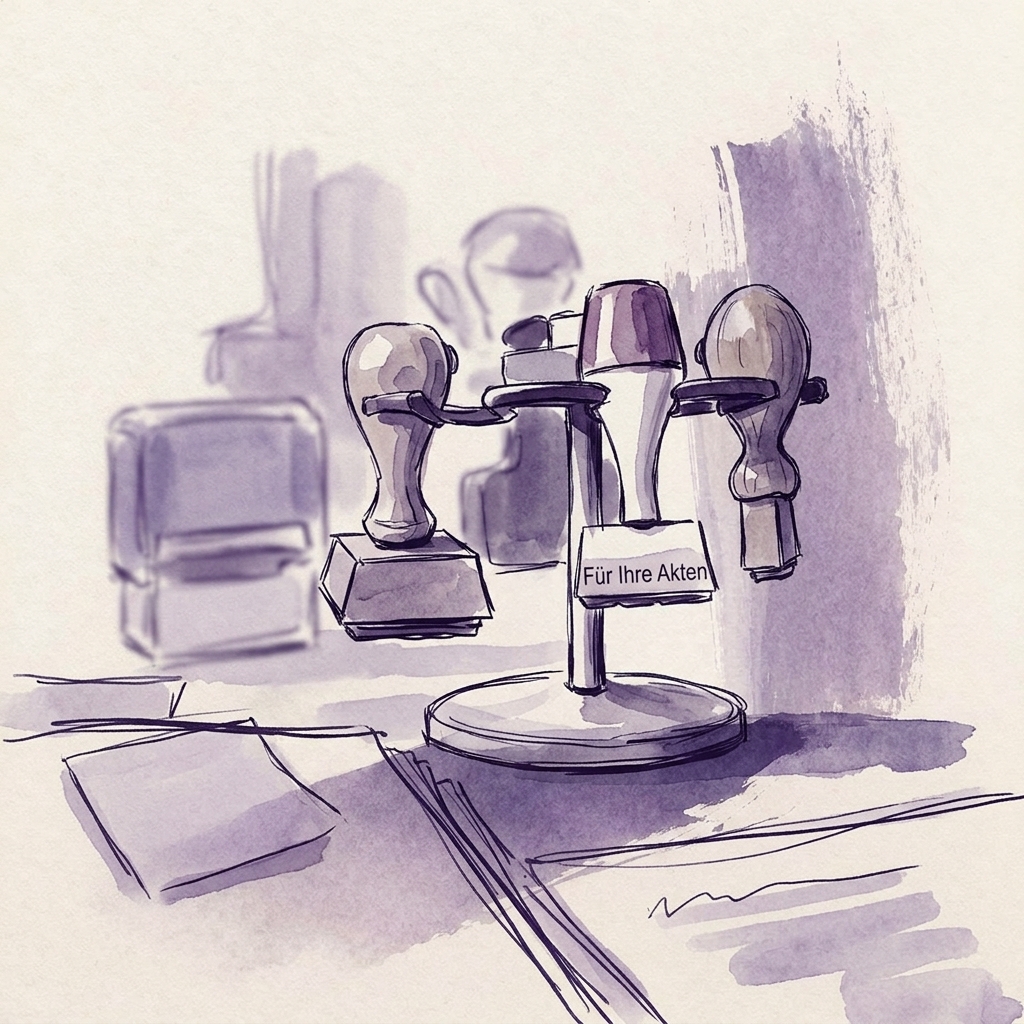



In early 2023, my flight from Beirut landed at Düsseldorf Airport. I was, like many Syrian doctors, among those who had left in search of a future that was less ambiguous. The reality of recent years had produced a degree of harshness that made staying on difficult, even for graduates of medical schools.
Our reasons for emigrating differed, yet they could all be reduced to a single heading: departing a world that no longer offered a stable professional or personal horizon. And the question that later imposed itself was: had we found here what we had been searching for?
My expectations of life in Germany were modest, built on my own judgment and the experiences of those who had come before me. I believe today that those expectations played a protective role at pivotal moments, when I asked myself, why am I here? The answer most recurrent in my mind was that emigration seemed, at that stage, the most logical choice for my professional path as a physician. And for a long time, I had no other explanation.
I arrived, weighed down with a dense accumulation of memories and with a sense that my homeland could no longer hold me, despite my repeated attempts to stay. That feeling, whatever its objective accuracy, was the psychological starting point of my experience in Germany: a sense of severance from a place where the contours of my life had taken shape over years, and within which I had fought multiple existential battles. However prepared one may seem for emigration, the experience of exile reveals the fragility of the individual, especially when one enters it already burdened by unresolved questions.
I remember the first months clearly as an arduous period of rebuilding the self outside a familiar environment: a new language, a different social system, and a pervasive feeling of contextual rupture. Some of us succeeded along this route, while others, myself included, remained suspended in a haze between two places. I could not reshape myself with ease, not for lack of desire, but because of the complexity of my formation in an earlier context, one that did not allow for a neutral starting point.
Our generation in Syria found itself caught in a stark binary reality: persevere within a country in crisis, or start from scratch somewhere else. That blank slate represented for many an opportunity for reinvention, while it appeared to me then as a closed situation, a high hurdle to clear.
I do not write this essay to deny individual responsibility, but to analyse, with some detachment, whether the bureaucratic system in Germany has contributed to deepening the experience of alienation among immigrants, or whether what we live through is part of a more generic process. Is this something universally experienced by anyone entering a new social system, one whereby an individual is expected to adapt and integrate by way of personal obligation above all else?
Bureaucracy in Germany: The Context of Its Formation and Its Meaning
When discussing bureaucracy in Germany, it would be misleading to treat it as a recent phenomenon or as a direct product of the contemporary state. The roots of this system date back to before the unification of Germany in 1871, and more specifically to the Prussian experience of the eighteenth and nineteenth centuries. Prussia was a state of limited resources, resting on a rigid military and administrative apparatus, compelling the development of administrative machinery founded on discipline, education, and legal clarity, rather than on personal loyalties or improvised solutions. It was within this context that an administrative model took shape, built on written rules, functional hierarchy, and the separation of person from office. This model was not exclusive to Prussia, however it became deeply entrenched there in terms of continuity and organisation, as historians like Christopher Clark document in his study of the rise of the Prussian state.
It is here that the role of the German sociologist Max Weber enters into view, who offered one of the most influential readings of modern bureaucracy. Weber described bureaucracy as the most rational form of organising work within the modern state, because it reduces arbitrariness and subjects’ decisions to a clear set of rules. In this model, the official treats the individual as a legal case rather than as a person — a set of data to be processed according to procedure— and this system has come to dominate modern societies.
What is striking about the German experience is that this administrative apparatus persisted, with adjustments, through profound political transformations in the twentieth century. Regimes changed, from the Empire to the Weimar Republic, then the Nazi era, followed by postwar Germany and its division, through to reunification. And yet, bureaucracy remained a constant in the structure of the state. This does not mean that the administration was morally neutral at every stage, nor can one claim that the bureaucratic apparatus was detached from the politics of power, particularly during the Nazi era— a subject debated by many historians that cannot be condensed here without damaging oversimplification. What can be said with confidence is that the idea of a state grounded in administration and law did not disappear, and it was reinvested in different contexts.
After the Second World War, and especially in West Germany, bureaucracy acquired a new dimension tied to the rule of law and social welfare. Adherence to procedure came to be seen as a means of protecting rights and preventing arbitrariness, rather than as an obstacle to them. The conviction took hold that justice could only be achieved through clear rules applied equally to all. From this perspective, bureaucracy transformed into a structural safeguard against the return of authoritarianism and chaos, transcending its function as a mere organisational tool.
Yet, what gives this system its strength is precisely what makes it difficult to navigate for individuals, particularly those arriving from outside of its cultural and historical context. The German bureaucratic system is unconcerned with personal context, individual history, or the psychological circumstances of whoever stands before it. It was designed to be impersonal, because personalisation had been, in the German historical experience, a gateway to chaos and injustice. As bureaucracy asserts itself through time, the question of where the human being belongs within this system becomes more pressing, especially for those arriving from different cultural and political backgrounds.
After three years in Germany, I came to understand that the bureaucratic system goes beyond being an administrative framework for managing transactions, and becomes an inhabited daily reality in which the individual is required to find their place, and to reorganise the rhythm of their life according to its own logic. Checking the mail each day, reading electronic messages, following up with the administrative official— all of this becomes an indispensable part of existing within the institution.
In this context, written correspondence holds a position of primacy as the principal means of communication with the system. This sometimes leads to a paradox that borders on the sardonic. The style of such letters, their tone, the opening and closing statements, bear no relation to their enclosed content. A letter may carry tragic news or concern life-altering decisions, yet they remain presented in a polished and neutral language, consistent with well-established etiquette norms of German official correspondence.
It was from this observation that my questions began taking shape around the psychological distance that bureaucracy imposes— a distance that does not stem from harshness or intent, but from the nature of a system designed to be impersonal, one that separates content from emotion, as well as inclusion of the receiver. This distance, which may serve a necessary organisational function, transforms at an individual level into a feeling of disconnection, giving rise to an altogether different experience. The individual ceases to look upon the system as a tool and begins to feel it as a framework that determines the shape of their relationship to their own legal and social existence.
Alienation Within a Coherent System
To understand this experience, it is useful to return to the philosophy that has addressed alienation as an existential condition. Camus holds that alienation arises when human consciousness collides with a silent world that offers no answers to its deepest existential questions— a being that seeks meaning but confronts an irrational and indifferent universe. From this contradiction, the absurd is born. Marx, for his part, sees alienation as the offspring of the social system itself. When the bond between the human being and what they produce is severed, work transforms from an act of self-realisation into an imposed burden, and the individual becomes a means rather than an end.
Zygmunt Bauman hypothesises a further dimension with what he calls Liquid Modernity: a society that has shifted from institutional stability and solid bonds toward a ceaseless fluidity. Under this system, identities and relationships become endlessly remouldable, and the individual finds themselves in permanent negotiation with uncertainty. These readings do not remain suspended as abstract theoretical texts; they reflect tangible experiences that can be recognised in the experience of migration and European bureaucracy, where the rupture between the individual and the system becomes measurable on the ground.
Between the Personal and the Objective
I did not notice, at first, the direct impact of bureaucracy on my sense of alienation. The paperwork appeared as logical obstacles that simply had to be cleared in order to arrive at the end goal: an entry visa, a temporary work permit. But that perception shifted with time, and a strange feeling began to take shape in me— a feeling of the self bleeding onto paper.
I found myself asking what this file represented to me, what I would be outside of it. How could my existence, with all the history and experience it carries, be reduced to a folder within a system? How could my life be delayed or brought to a halt because of an incomplete procedure, or the absence of a civil servant with no one to stand in for them.
These feelings extended until they touched a form of psychological categorisation that sometimes seeps into the way institutions deal with people: only what is written is recognised, and what has not been documented finds no path into consideration. I felt a gradual contraction, and a mounting pressure to reshape myself in accordance with an administrative logic whose very essence is neutrality.
Yet, that neutrality, when tested at the level of individual experience, risks turning into a suffocating impersonality— one in which procedures weigh down human existence and sever the person from their emotions, their circumstances, and their capacity for belonging. This is neither intentional nor arbitrary, but a side effect of a system designed to operate with efficiency, not to read for human complexity concealed behind a file.
Open Questions
The experience of alienation cannot be pinned to bureaucracy alone, nor can it be separated from the personal context that the individual carries with them to any new place. The German administrative system, with its clarity and discipline, plays an essential role in organising life and protecting rights. At the same time, it functions not without logistical obstacles which have come to hinder the state itself, causing a visible deficit in its ability to keep pace with accelerating economic and political demands.
Alienation does not arise here as the result of an imposed injustice, but as a condition formed in the distance between what the system promises in the way of justice and what the individual experiences as loneliness and inner silence. It is a distance which cannot be bridged by law alone, nor by any single philosophical interpretation.
What ultimately appears central at the close of these reflections is not how alienation might be overcome or eased, mainly due to its cumulative, long-term nature which does not admit of quick resolution. What is central is how one might live alongside it without allowing it the power to rupture the self. Alienation, at its depth, is a continual renegotiation between who we are and who we are asked to be.
In this contact between the personal and the objective, between the system and the self, alienation remains an experience open to interpretation. And perhaps the question most worth raising is whether there exist alternative systems of administration which might bring an individual closer to the system they inhabit rather than as a mechanism for separating them from it.