The Poem We Do Not Possess
Author: Manahel Alsahoui
Original Arabic text
Translation revision and editing: Amani Gebali
For a long period of time, the poet has been imagined as the creature who can verbalise anything: their own emotions and those of others, their sorrow and the sorrow of the world. In love, he is asked to write; in separation, he is summoned again: « write about us, about our grief and our pain. » As if being a poet meant possessing a complete and obedient language, ready at any moment. And when one of us says « I cannot » the answer is often disbelief: how can you be unable to write when you are a poet?
In the collective imagination, the poet is the one who vocalises feelings at all times. This image grants poetry an almost supernatural power. Perhaps there is some truth in that. Yet, every extraordinary power still paves the way for helplessness to emerge.
The Illusion of a Complete Language
This idea rests on a deep cultural illusion: that language is an instrument in the poet’s hand, and that expression is an act of mastery. If the act of expression is controlled, then the poet must be able to command language whenever he chooses. But the lived experience of poetry suggests something else entirely. Language cannot simply be owned or summoned. It is pursued. Sometimes it appears, yes most times it withdraws.When this happens, readers may feel a certain disappointment, as if the myth of the ever available poem had suddenly collapsed.
The problem is not that poetry is incomplete. The problem is that expectations of poetry are built on an overly simple understanding of language, as if language were merely a vehicle for meaning rather than a space in which meaning itself comes into being. For this reason, the poet cannot always convey what they want to, neither in the poem nor in life.
The French poet Stéphane Mallarmé once remarked that poems are not made from ideas but from words. Writing, in this sense, does not depend on the presence of the poet but on a kind of withdrawal, allowing language to act on its own terms. The poem then ceases to be a direct expression of a self that fully controls its speech. Instead, it transforms into a linguistic phenomenon in which the self itself takes shape. Poetry emerges from a delicate tension between words and ideas, and when that equilibrium shatters , what the poet hopes to say may be distorted or even lost.
Yet language alone does not explain the difficulty. The myth of the endlessly inspired poet conceals the real labor of writing: hesitation, modification, recollection, and revision. Add to all of this, that strange experience in which the poet feels they are not inventing the words, but that he is actually trying to catch them. For this reason, the English poet T. S. Eliot suggested that the poet should be a servant of language rather than its master. Language carries its own force, and the poet works within that force just as much as he works with it.
The Poet Is Not a Poem Factory
Even movements that appeared to restore authority to the writer did not ultimately reinforce the image of the controlling author. Surrealist automatic writing, for instance, assumed that language could precede consciousness or move beyond it. Language was no longer a reservoir we deliberately draw from, but a current that passes through us. Whether or not these theories fully capture the truth, they point toward a simple fact: writing poetry is far more complex than it appears to be.
Not everything that is written satisfies the poet or the reader. There often remains a gap between what language manages to say and what the poet hopes to convey. In my view, this gap lies at the heart of the poet’s difficulty before the poem itself. Seen from this perspective, the idea of the poet as a poem factory begins to dissolve. The poet may indeed create, but creation itself is uncertain, uneven, and sometimes impossible.
A poem does not reach completion through linguistic mastery, Instead, it is perfected through negotiating its limits : More precisely, perhaps through accepting what language can humbly offer us rather than expecting the perfection we wish it to represent. Anxiety, therefore, is not incidental to the poetic experience. It is one of its conditions. The ground of poetry is unstable, and language is not a solid surface on which we can safely stand.
Sometimes We Write What We Wish to Know
Very often what we wish to say goes beyond the poem, or lies deeper than our immediate ability to express it. Sometimes silence feels preferable in comparison to an incomplete utterance. Sometimes a poem begins but never ends. Sometimes it is written and erased, or rewritten as if it had never existed. This is not a sign of weakness. It is an acknowledgment of the limits of poetic language when faced with the complexity of human experience.
And yet the poem sometimes reveals something the poet did not know before writing it. The poet may believe they are pursuing a particular thought, only to discover that the poem has led them somewhere entirely unexpected. At that point, a question emerges: Who is truly in control, the poet or the poem? Or perhaps that elusive force we call inspiration?
Robert Frost, an American Poet, once captured this idea in a simple remark: « No tears in the writer, no tears in the reader. No surprise in the writer, no surprise in the reader. »The poet does not write because they know everything. They write because they are searching for a form of knowledge, something sensed rather than fully understood, something that seems to exist somewhere beyond reach.
Thus, discovery becomes part of the poem itself. Writing is not merely the result of knowledge, though the latter may sometimes guide it. It is also a way of knowing, a path into the depths of human experience. This is where much of poetry’s fascination lies for poets themselves. At times we write what we hope to understand. Other times we write precisely what we do not know yet.
The English writer Rudyard Kipling once described words as the most powerful drug used by humanity. Yet knowing how to use this drug does not mean possessing it. Language remains a force that exceeds us even as we attempt to discipline it. For this reason, giving voice to emotion is more difficult than it appears. Not because we fail to feel deeply, but because feelings do not automatically transform into language. Writing requires the courage to continue in the presence of uncertainty.
Poetry lives in the space between the poet and what they are trying to say. Sometimes that distance narrows until language and self seem almost identical. At other times it widens until both grow indistinct. It is precisely within this tension that poetry comes into being, not as a language owned by the poet, but as a movement of approach and withdrawal between two forces willing to risk the journey.
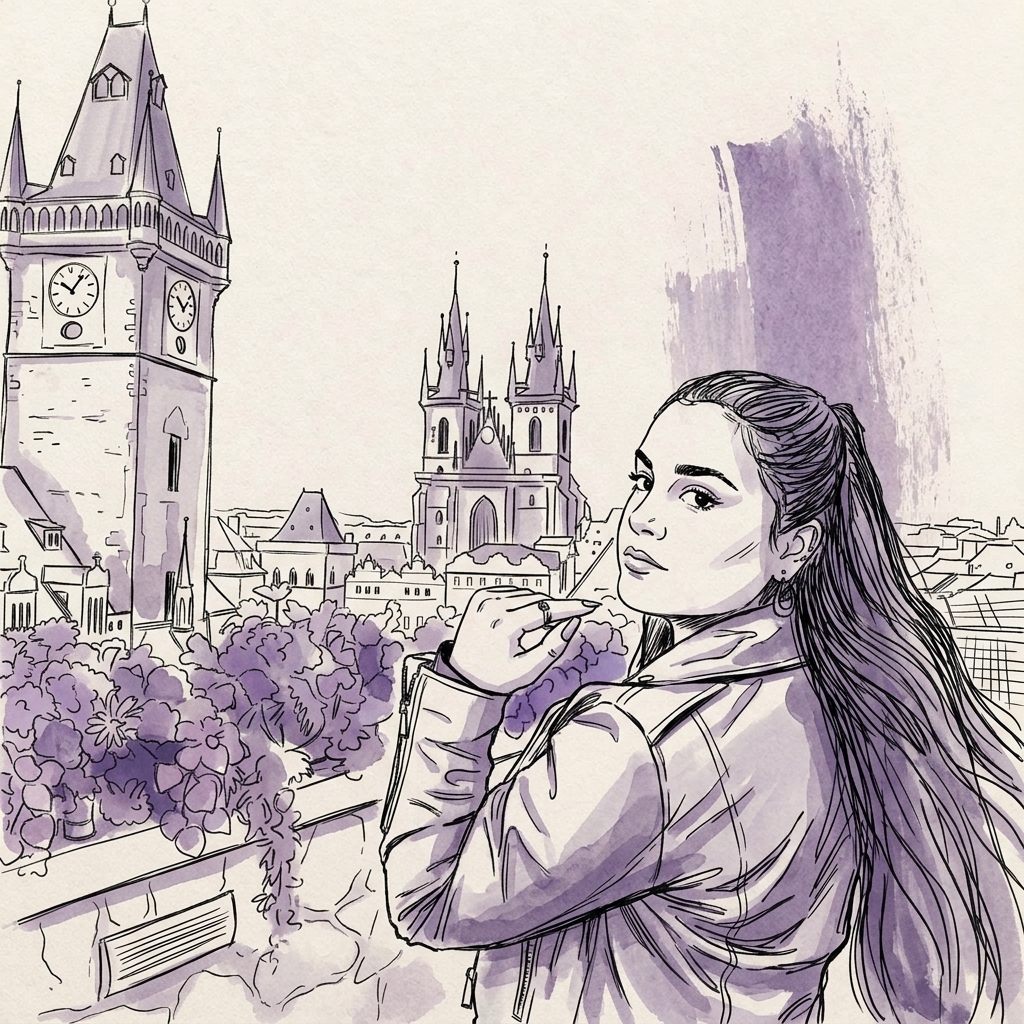
A Syrian poet, writer, and cultural journalist based in the Czech Republic
Tunisian writer and translator, Professor of English, and vocal artist based in France